Defending FE: defending social mobility and the power of education

Further Education is not a marginal sector operating at theedges of the education system – we are fundamental to individuals, communitiesand society. Over 1.6 million learners participate in FE every year.
On the government’s terms FEis an economically strategic parts of UK public education. FE colleges deliverthe majority of technical qualifications and apprenticeships in England. Theytrain construction workers, engineers, health and social care professionals anddigital & green technology specialists.
When governments speak about economic growth, net zerotransition, housebuilding, infrastructure or productivity, they are speakingabout sectors trained in FE.
As a teacher, an educationalist – I’m inspired by the transformationalnature of FE, along with the whole post-16 education sector.
I see day in, day out that we change people’s lives. Weteach courses that provide students with the skills or knowledge to progress tohigher studies or into work. But we also provide a different learning environmentto school – where many people struggle due to the pressures of being a teenager,the high level of control and so forth.
We build students confidence to speak up and try new things.Working in education is a highly social and emotional job – we’re buildingsocial relationships with our students and within the whole class. This helpsall of us understand each other and learn from each other.
Yet for over a decade FE and Adult Education has been structurally underfunded — even as the needs of our students have intensified dramatically.
If we are serious about defending education, social mobilityand social cohesion, then we must defend Further Education.
I’m aware that much of this article could be applied toother areas of post-16 education – we need to look and highlight these areas ofunity.
Social mobility and social cohesion
FE plays a disproportionate role in educating working-classand disadvantaged students. The Sutton Trust in its 2021 report Going Further:Further Education and Social Mobility found that 43% of young people eligible for free school meals attend FE colleges, compared to 32% of more advantaged students.
Moreover a government-commissioned review, The Contribution of Further Education and Skills to Social Mobility (2015),found that participation in FE and skills learning has a positive impact on sixout of seven indicators on social mobility.
FE is also ensuring that there is access to education in some of our most deprived areas of England. Department for Education analysis on disadvantaged learners in FE shows that nearly onet hird of FE and adult learners come from the 20% most deprived areas in England.
This is not incidental; it was a key reason why FE wascreated. And it’s even more necessary in a society where so many feel leftbehind, ignored and lacking hope. We see Reform UK exploiting these concernsand whipping up racist narratives.
FE could be central to challenging these narratives andproviding opportunities to overturn this despair and division.
But adult participation in learning has fallen sharply, byroughly one third since 2010, according to analysis by the Institutefor Fiscal Studies.
That decline represents lost second chances. It representsadults who cannot retrain, cannot upskill, cannot progress. And there areclearly links to equality – with women gaining the opportunity to train (or retrain).My mum for instance, left school at 16, and then gave up work when she had mybrother and me forced into traditional gender roles. When I was a teenager, shewent to our local FE college and then went to Uni to train as teacher.
Without FE, education becomes something you either get rightat 16, or lose access to permanently.
Over a decade of underinvestment
Despite this central role, FE has experienced a prolongedperiod of underinvestment.
The Institute for Fiscal Studies’s report Long-run comparison of school and college spending in England, found that 16–18 funding per student in further education fell by around 14–15% in real terms between 2010 and 2019. Even with the recent improved 16 – 19 funding changes, -per student funding is still 8% less in real terms than 2010-11
Even more shockingly adult education funding fell by around onethird in real terms over the same period.
This means colleges have been expected to do more, forstudents who often need more – but with significantly less funding per learner.
This isn’t just a teacher or trade union critique – ouremployer body, the AoC has raised concerns. The AoC have called out thegovernment’s underinvestment and highlighted how access to education is beingdrastically reduced – “40 per cent ofcolleges reported being forced to cancel courses because of a lack of staff”
The AoC warned that colleges are struggling to recruit andretain staff because they cannot compete on pay with schools or industry. This situationis only going to get worse as the number of students will increase – yet westill struggle to recruit and retain teachers.
Even Parliamentary committees have highlighted the problemsin our sector. The EducationCommittee Chair, Helen Hayes, stated
“15 years of real terms funding cuts and stagnant payhave left colleges struggling to recruit and retain teacherswho earn far less than their peers in schools. Farfrom receiving the parity of esteem it’s been promised inthe past, FE continues to be treated likethe Cinderella of the education system.
“We call for investment in the sector and theestablishment of a statutory pay review body to make recommendationson staff salary increases”
Whilst Starmer’s government has stated they have “no plans”to create a statutory pay review body – it has raised the notion withinParliament and the government.
And, although nothing is certain in Politics – Starmer’sgovernment hardly looks like the strongest most clearly policy driven government.With pressure, it is perfectly feasible that an FE statutory pay review bodycould be created.
When college leaders, parliamentary committees andindependent economists all describe the same structural problem, that gives us political leverage.
Rising Need: EHCP Growth and SEND Pressures
Whilst funding has fallen in real terms, not only arestudent numbers set to rise but our students’ needs have increased sharply.This is not news to any of us working in the sector, but the figures are quitestark.
The DofE SpecialEducational Needs in England statistics show that the number of youngpeople with an Education, Health and Care Plan (EHCP) has more than doubledsince 2015. There are now over half a million children and young people withEHCPs, with rapid growth in the 16–25 age group.
Many of these young people transition directly into FEcolleges at 16. Colleges are therefore supporting a dramatically expandedcohort of learners with complex needs.
Yet our Additional Learning Support departments have beencut across the sector. When I started in FE in 2010, I was part of the ALS team– there were 9 full time staff dedicated to ALS. Now there are 2. This is notisolated to my college but a sector wide problem.
Again, the Parliamentary Education committee has researched thisand stated that “theSEND system was broken, long past needing repair, and chronically letting downchildren, their families and their teachers”
I have more students in my class with EHCPs and neurodivergence,but there is no support. Instead we are sent a 2 sided document on “Possible reasonable adjustments for studentswith ADHD”. I understand why our support team have created this, because they don’thave the staff to support all students. But this is woefully inadequate, it isimpersonal and is limiting our students ability to succeed.
The Mental Health Crisis
On top of this our youngpeople are facing more mental distress. The NHS Digital survey MentalHealth of Children and Young People in England shows that in 2017,around 1 in 9 young people had a probable mental health disorder. By 2023, thishad risen to around 1 in 5.
Colleges are increasingly supporting students experiencinganxiety, depression and trauma — often while specialist NHS services are overstretched.
Again, this is no surprise to any of us in the sector. When we ask students why they are absent – they share their feelings, fears and struggles.The breaks between lessons are absorbed with sitting with students, supporting them and trying to signpost them to services that we have seen shrink.
FE staff are frequently the frontline responders. This isnot acceptable or sustainable – they need proper trained support and care.
All of this leads to increasing burnout and stress of our FEstaff.
National binding bargaining is not just a campaign slogan
If funding is nationally determined and policy & skillspriorities are nationally determined – then bargaining cannot remain fragmented and local.
Differences in 16 – 19 funding and 19+ funding are rooted ingovernment decisions as the DofE sets the funding formula for both age groups. Whilst 60% of Adult Education funding isdevolved – the pot that this comes from is the DofE’s Adult Skills Fund.
When we first raised the idea of national bindingbargaining, some in our union said it was like “arguing for unicorns”.
But the evidence is clear – there are calls in sections ofParliament, government and our employers. It is our job to push on these callsand build pressure on our employers.
Without national binding bargaining, we have postcodelotteries in pay, fragmented negotiations and structural competition betweencolleges.
Our responsibility is to organise that evidence intocollective strength and use all of our campaigning, political and industrial tools.
If elected as UCU VP from FE,I would be out visiting branches, listening to members and discussing the current context. I would support a campaign that called on employers and, where needed, pressure our employers to support calls for national binding bargaining. At the same we can lobby government and MPs on the need to implement Parliament’s Education Committee recommendations.
We need to do all of this, andwe shouldn’t shy away from employing a range of tactics. And this means we also should also organise nationally coordinated industrial action to ensure we win.
Further Education is essential to social mobility, cohesion and community stability.
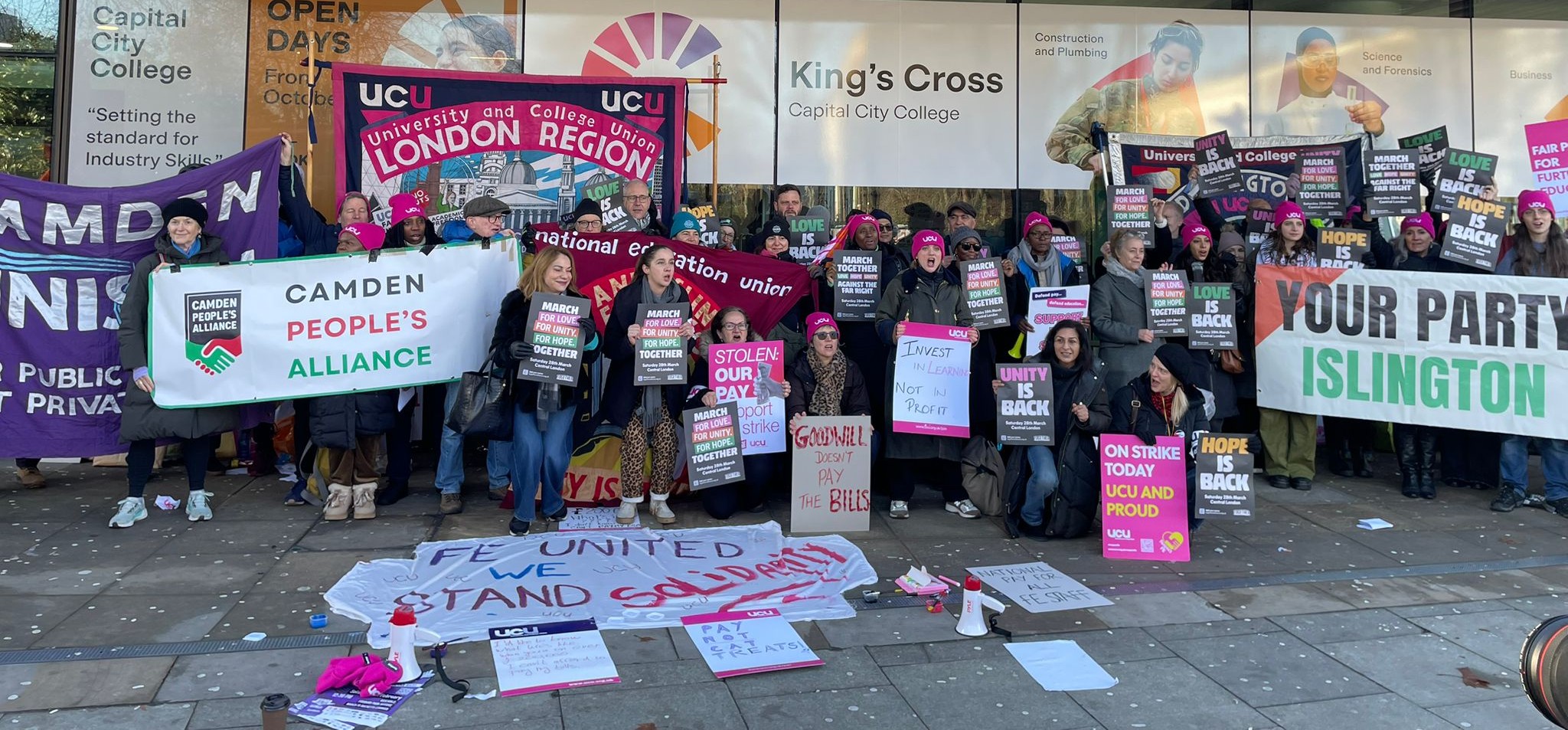
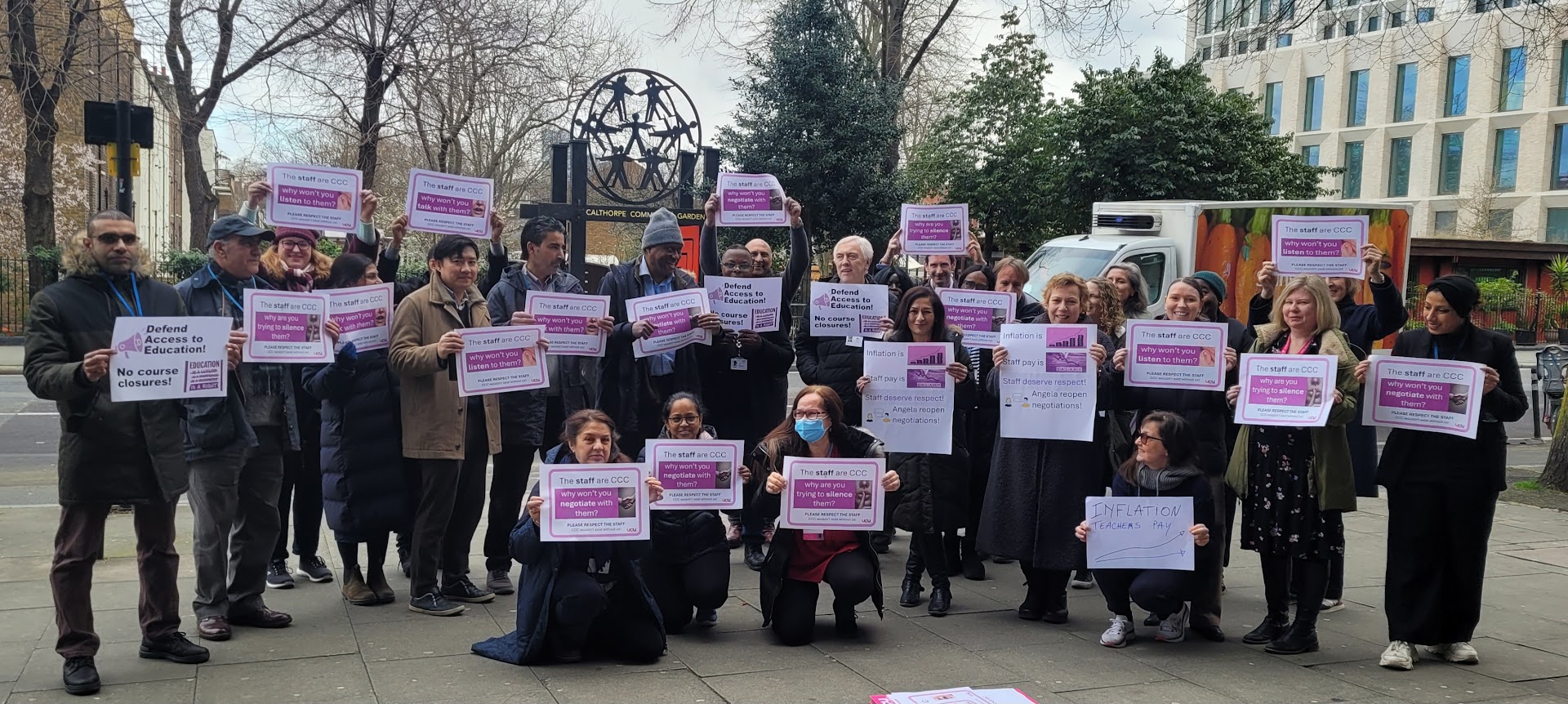
Defending FE, along with the rest of the post-16 education sector,requires more than words. It requires collective strength and leadership prepared to follow through.


.jpg)
Get involved


I’m standing for UCU Vice President (FE) because I care deeply about the whole post-16 education sector. I believe our union can and must be a powerful, organising force that delivers for members. Members want a union that listens, stands up for them, provides real solidarity and is prepared to fight with and for them.
If you have any questions, please get in touch as I really do want to hear from members: rpilling4UCUVP@proton.me
Unfortunately, turnout in UCU elections is often low, so every vote counts. If you support what I’m standing for, please vote for me and encourage others to do the same.
It would be an honour to serve as your UCU Vice President (FE) and to stand up for our members across the sector.
I am standing as a member of UCU Left, here is more information about our slate https://uculeft.org/nec-elections-2026/
If you’d like to get involved in the campaign, please fill in the form below: