Stand with Minnesota - Stand Up to Farage.
By Regine Pilling and Sean Wallis
The killings of Renee Good and Alex Pretti by ‘Immigration and Customs Enforcement’ (ICE) agents have shocked people across the world. ICE has terrorised communities from LA to Minneapolis and children as young as 5 have been detained by ICE. A wave of anti-ICE protests have erupted across the US, but many are understandably scared of standing up against a paramilitary which has been given central Government license to arbitrarily detain, even kill, and placed itself above the law.
On January 23, trade unionists and left groups supported a call for a General Strike in Minnesota. Although this was more symbolic than a full general strike, it shows the importance of workers’ organisations and trade unions building a mass movement against Trump.
The Trump administration’s attack on human rights has been making the pages of Amnesty International and Human Rights Watch from Day 1. Those who believed that Donald Trump’s second government would behave like the first saw instead a blistering series of attacks on human rights, free speech, the rights of asylum seekers and immigrants, health, environmental and social protections, education, foreign aid and humanitarian assistance, and the rule of law.
Amnesty observes how Trump’s regime also became a symbol to other right-wing governments. This is celebrated by Nigel Farage and has led to Keir Starmer’s appeasement and copying of racist narratives.
We have seen Trump attack educators and scientists alike. In the summer one of us (SW) wrote
Trump’s attacks on Harvard and Columbia are a piece with his purge of the Center of Disease Control, Voice of America, etc., proving the old adage of the indivisibility of freedoms.
That is why everyone who cares for democracy and human rights celebrates whenever people in the US fight back. It is why millions of people around the world Stand with Minnesota and why Bruce Springsteen’s Streets of Minneapolis shot to No.1 in 16 countries in one day.
Democracy is under threat. Trump stood in elections, but his attacks on human rights and trade unions, even states rights, are clearly intended to make the US a more authoritarian society, allowing him and his supporters much more permanent control.
A warning for the UK
Nigel Farage and his far-right ‘Reform UK’ project is modelled on Trump’s project.
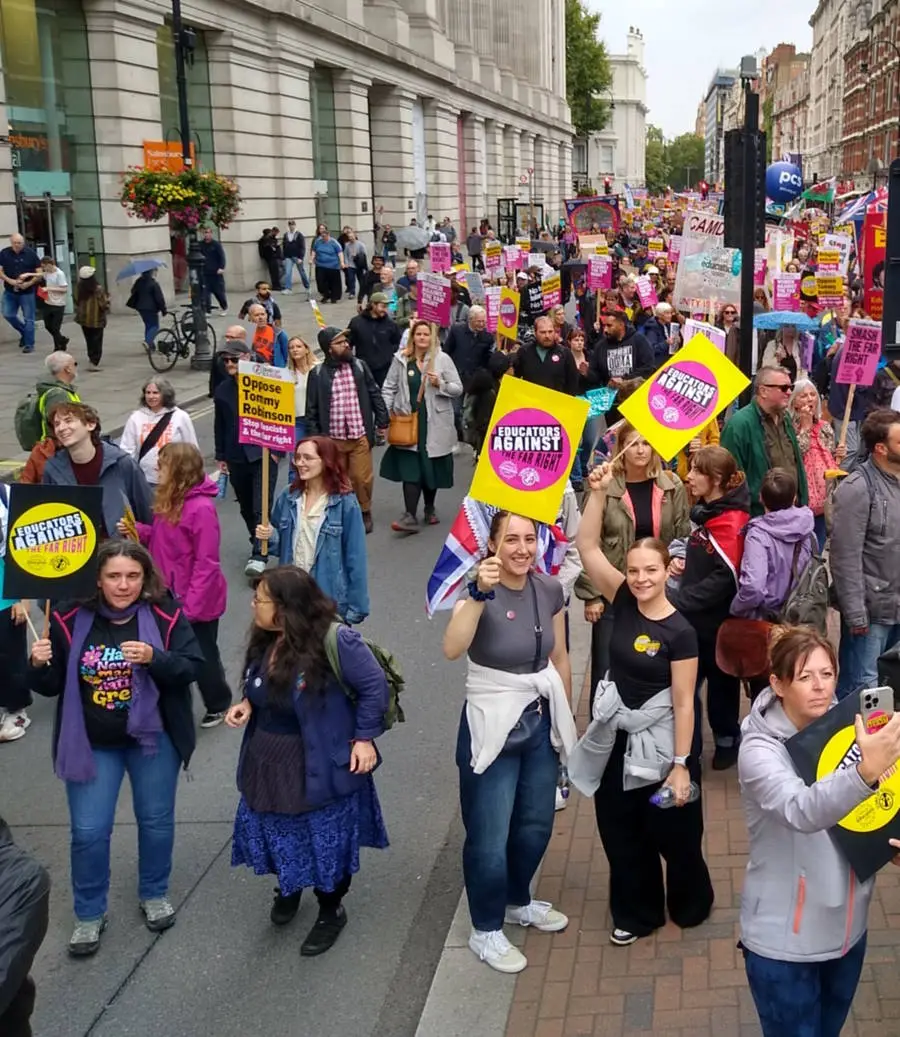
Reform are only the visible tip of a far right campaign. Reform is creating a racist mileu for much more extreme political groupings, including open fascists, to recruit from. The most prominent of these is Stephen Yaxley-Lennon, who styles himself ‘Tommy Robinson’. A British National Party (BNP) organiser, he has increasingly operated as a social media ‘influencer’, garnering support online, and only breaking out into the public on occasion as he did most recently on September 13 2025, when he managed to bring over 100,000 supporters onto the streets of Central London.
More openly fascist groups like ‘Homeland’ and ‘Patriotic Alternative’ have been active in flag-raising and asylum hotel protests. They have not stopped there. It was only in the summer of 2024 that they attempted to launch race riots across the UK, attacking black people in the street and targeting solicitors firms, mosques and synagogues.
The far right have since attacked trades council meetings. And in Portsmouth, a mob attacked a student hall of residence. Reform’s progress in the polls is emboldening far right violence.
What of Reform itself? As with Trump’s MAGA project, the lines between the old Republican (read: Conservative) party and his camp are blurred, with ostensibly right-wing ‘centre-right’ politicians jumping ship. Electorally, that boosts Farage of course, gaining seats without standing in elections. But it exposes a weakness.
Like Trump and his coterie, Reform has a central contradiction at its heart.
It poses as an anti-establishment party, but is funded by the super-rich. It asks for the support of workers and ex-workers, but it seeks to advance an agenda of increasing exploitation, denial of rights and suppression of resistance. Hence the use of the term “political establishment”, which is part of the language code of the UK far right, like in the MAGA movement.
Across Europe, we’ve seen a rise of the ‘hard right’, including Reform, AfD and other far-right parties, due to austerity after the 2008 subprime crash, regardless of whether the austerity was implemented by Conservative, Labour or their international equivalents.
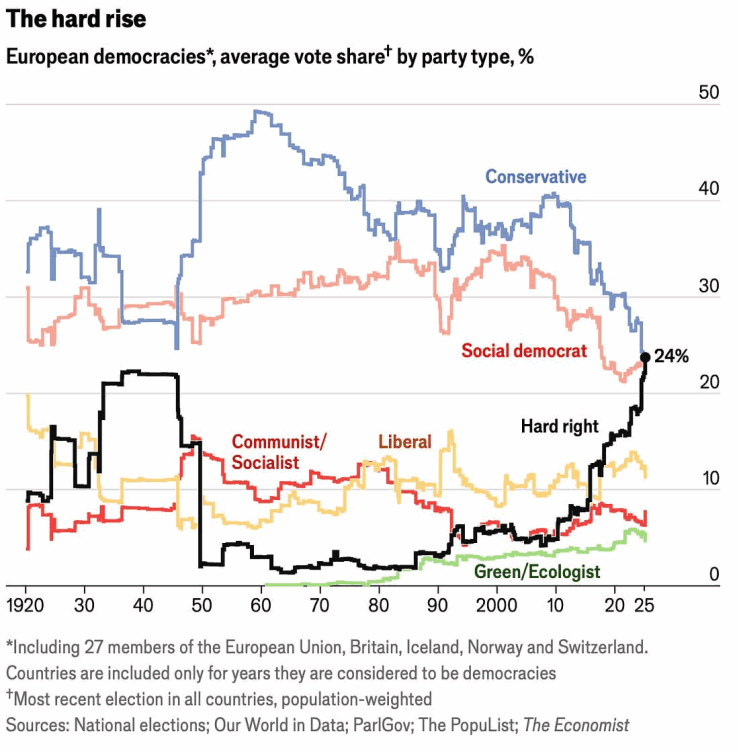
Figure source: Tony Annett on X.
So the recent batch of defections of right-wing Conservative MPs to Reform UK carries a political risk.
These are the same “establishment” MPs who imposed austerity, cut benefits, oversaw pension raids and wage attacks, suppressed workers’ rights and did nothing while the industrial heartlands of Britain were shut down. These MPs are the enemy of those Reform claims to speak for.
In the face of an obvious contradiction, how does Reform respond?
Simple, it pushes racism.
Scapegoating immigrants has proved a potent method for misdirecting its supporters.
Although Reform generally maintains an arms-length relationship with actual fascist groups, the more Farage promotes racism, the more he opens the door to fascist-led protests, such as the ones targeting refugee hotels and hostels, as Searchlight and Stand Up to Racism have documented. An undercover reporter in Wales exposed one of the groups for the BBC.
The turn to increasingly open anti-refugee ‘stop the boats’ propaganda began by the Conservatives after Brexit, but Farage was always able to position himself as that bit more extreme. The ‘small boat problem’ is resolvable by ‘safe passage’ measures, but it provides a useful target for right wing newspapers. The numbers are also tiny, whether in comparison with the UK population (69.3 million) or the legal migrants applying for work visas (peaking at around half a million a year in 2023).
Although the headlines and cruelty are targeted on desperate people in small boats, in reality, it has been overseas workers applying for jobs in the UK who have faced the biggest impact, particularly for those with visas for nursing and social care, leading to condemnation from the RCN.
Students and staff face deportation
We have seen that international students and staff have faced physical attacks from the far right. But Reform is directly targeting migrants of all kinds.
They are not just making idle threats. In places like Kent and Lincolnshire where they control councils, they are making the lives of migrants harder, and seeking to socially exclude them by cutting funding from ESOL classes.
Farage boasted last year about his aim to abolish Indefinite Leave to Remain, and deport large numbers of immigrants. This places 3.8 million migrants and their families who have been legally living and working in the UK for less than 5 years at risk of deportation.
But Keir Starmer opened the door. Only a few months earlier, Starmer’s government announced that ILR for some migrants would extend from five to ten years, along with more restrictive visa controls. This was all in the aim of ending ‘Britain’s failed experiment in open borders’ (sic). There should be open borders, but Britain has never attempted this!
If Farage gets into Downing Street, we know our students and staff will be targeted all over the UK.
As with social care, targeting ILR will be devastating for university staff and the entire sector.
Universities thrive on their international connections. Staff move between countries. Internationalism is fundamental to scientific research. Knowledge knows no borders, research teams are international, as are collaborations between staff in different countries. And we teach what we research.
The scale of the threat is massive. A quarter of university staff and students are personally at risk.
- Staff: In universities reporting to the Higher Education Statistics Agency, 24.6% of staff were from outside the UK in 2024/25. Local workforce statistics show a higher proportion of international academic and research staff, with more than half from outside the EU.
- Students: HESA data for the period 2020-2025 shows that the proportion of international students studying in the UK fluctuated between 22 and 25%. In 2024/25, over two thirds of all enrollments in Masters and other postgraduate programmes were made up of overseas students – in part, a consequence of more than a decade of home undergraduate student loans.
Keir Starmer’s government has made Reform’s attacks on overseas students appear credible by conceding the idea of an international student levy, on top of the Conservatives’ curbing of international student visa rights the year before.
The stage is set for a major attack on overseas students and staff.
We have to stand up for everyone.
Racism is not just “out there”: it’s on our campuses too
We are also seeing a rise in everyday racism.
We are seeing a growth of an extreme right-wing internet subculture and its impact in the classroom. Union members around the UK are reporting a rise of far-right views expressed by students, ranging from anti-immigration, pro-colonialist and misogynistic ideas, and even open Holocaust denial and swastikas on whiteboards!
Only a few years ago, such instances would be rare. But the growth of the far right internationally, and the weaponisation of AI, means that members are having to challenge students much more frequently.
We must not ignore this offensive. Young people are being influenced by far-right influencers like Andrew Tate. The fascist ‘Tommy Robinson’ and his supporters mostly organise on online forums.
A generation betrayed by politicians are rightly angry – they are likely to be poorer than their parents, will struggle to gain housing, laden with tuition fee debt if they go to university, and face a world that is seemingly falling apart.
The far right is attempting to direct that anger towards those moving to this country, to other workers, to teachers, to scientists – anyone but those responsible.
Our role as educators requires us to robustly challenge racist and other reactionary ideas in the classroom. Lecturers must be able to exercise their judgment and freedom of speech to draw out those ideas and challenge them. This is not always easy.
What can UCU do about this?
Our union needs to massively increase its campaigning and be open and upfront about the clear and present danger posed by Reform UK. Jo Grady has rightly taken on Richard Tice on Question Time, and UCU has made some public comments about the threat of Reform.
UCU is part of the Together Alliance, and is affiliated to Stand Up to Racism and Hope Not Hate.
But we need to do a lot more.
UCU has also done a lot of good work to support migrant members’ rights. We have a migrant members standing committee, and a wide range of resources.
But this work has often been limited by a legalistic approach. Thus when Congress democratically voted to oppose staff monitoring student attendance to comply with immigration monitoring, union legal advice was that reps should not ask staff to ‘break the law’ or ‘refuse a contractual obligation.’
The problem is obvious. If our starting point is to be limited by the law, then any far right government can shackle unions by simply changing the law.
But we also have to keep repeating a basic trade union argument: an injury to one is an injury to all.
Our sister union, the National Education Union (NEU) has publicly labelled Reform a racist party, referring to Nigel Farage as a ‘pound shop Donald Trump.’ This clearly angered Farage, and he has publicly attacked the NEU. But this was inevitable, and has opened up space for union members to engage in serious campaigning backed by their union, both inside the classroom and beyond.
Below we set out some practical proposals.
1. Tackling racism in the classroom
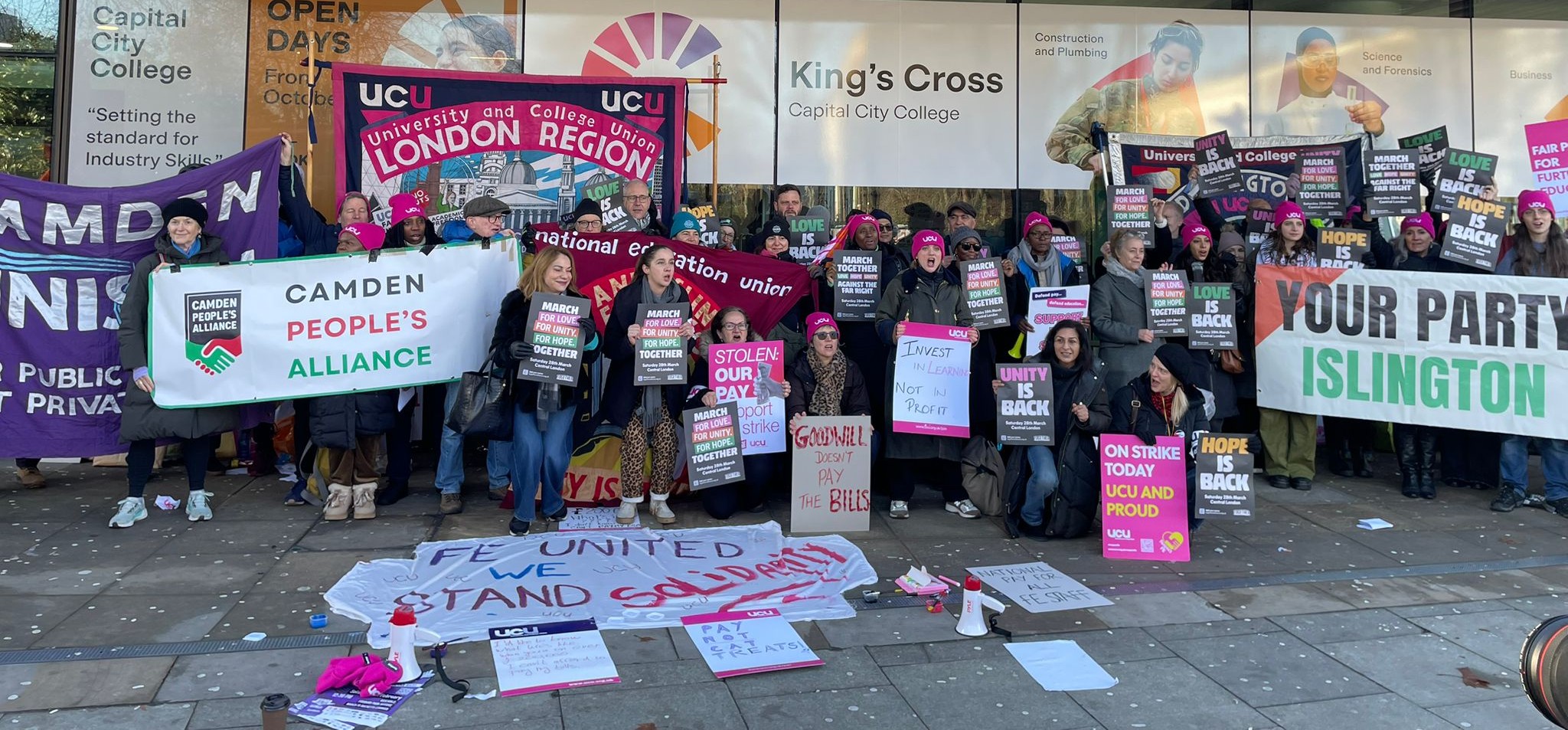
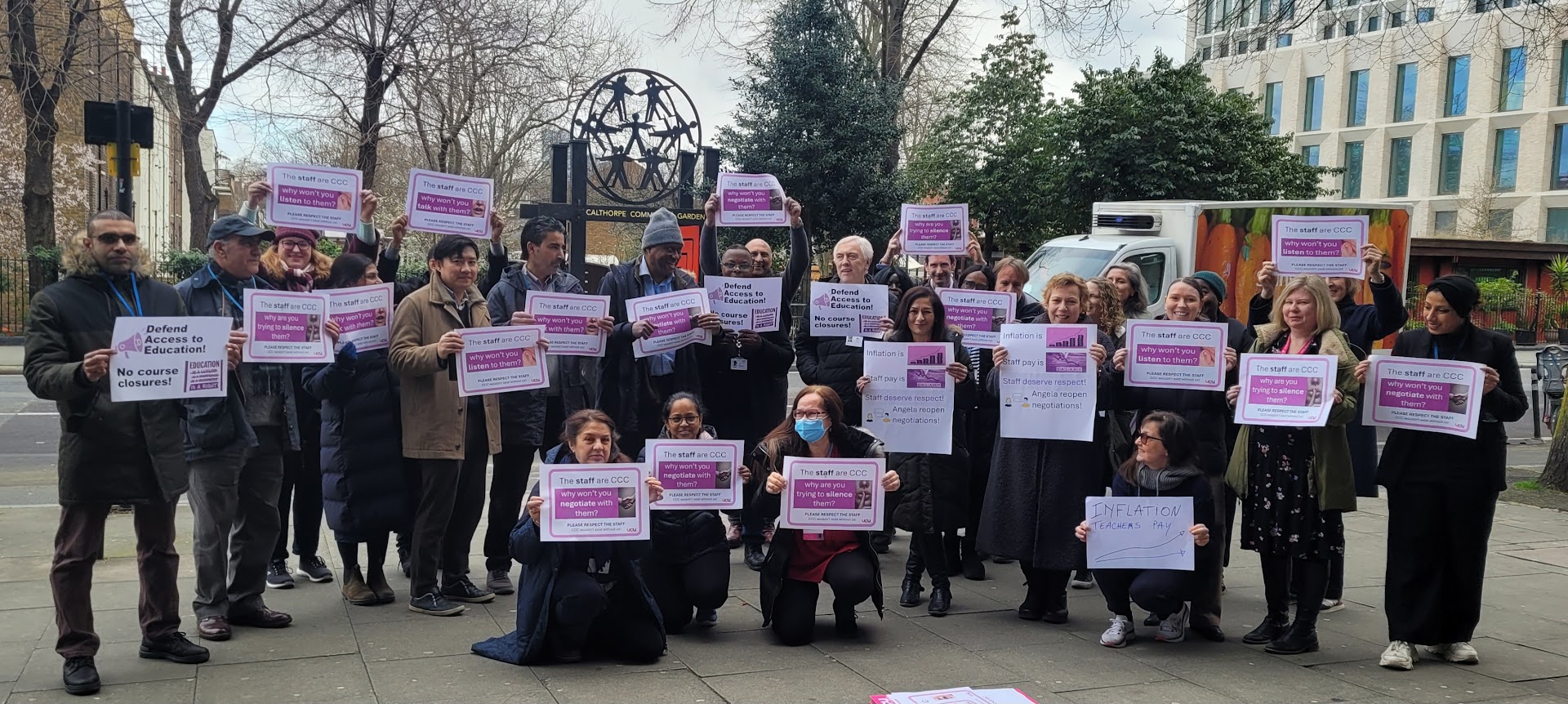
At last year’s FE Sector Conference, one of us (RP) put a motion calling for more support for anti-racist education initiatives led by the union. At Capital City College, we have had Themed Learning Weeks to tackle racist and anti-migrant narratives.
In Higher Education, a different dynamic is at work. For many years, academics were essentially placed above criticism (which had its good and bad aspects!). But now student complaints are amplified by social media, and they are often selectively quoted by managers. Although the UK has not yet had a Tom Alter case, the harassment of Palestinian academics at KCL by far right and Zionist groups has come close. Palestine remains the test case for free speech.
Student complaints can be taken outside of the university to the Office for the Independent Adjudicator (OfIA), so managers are strongly encouraged to ‘believe’ students over staff. Harassment of staff for political disagreements has become routine, despite recent changes in the law supposedly to support free speech.
In Further Education, this issue is not so stark, but we are seeing an increasing use of student surveys to discipline staff if their ‘scores are below the benchmark.’
Educators have a crucial role to play in the fight against the far right.
Colleges and universities have long been bastions of an inclusive culture. That’s not surprising: it is where young people start to develop their own ideas and sense of self. College is where young people often come out for the first time, which is why LGBTQ+ solidarity is essential.
2. Building solidarity
We need to organise within our colleges and universities to defend and strengthen this necessary culture of solidarity and inclusion, and build out into surrounding cities, towns and communities to challenge Reform and the far right wherever they appear – on the streets or in the ballot box.
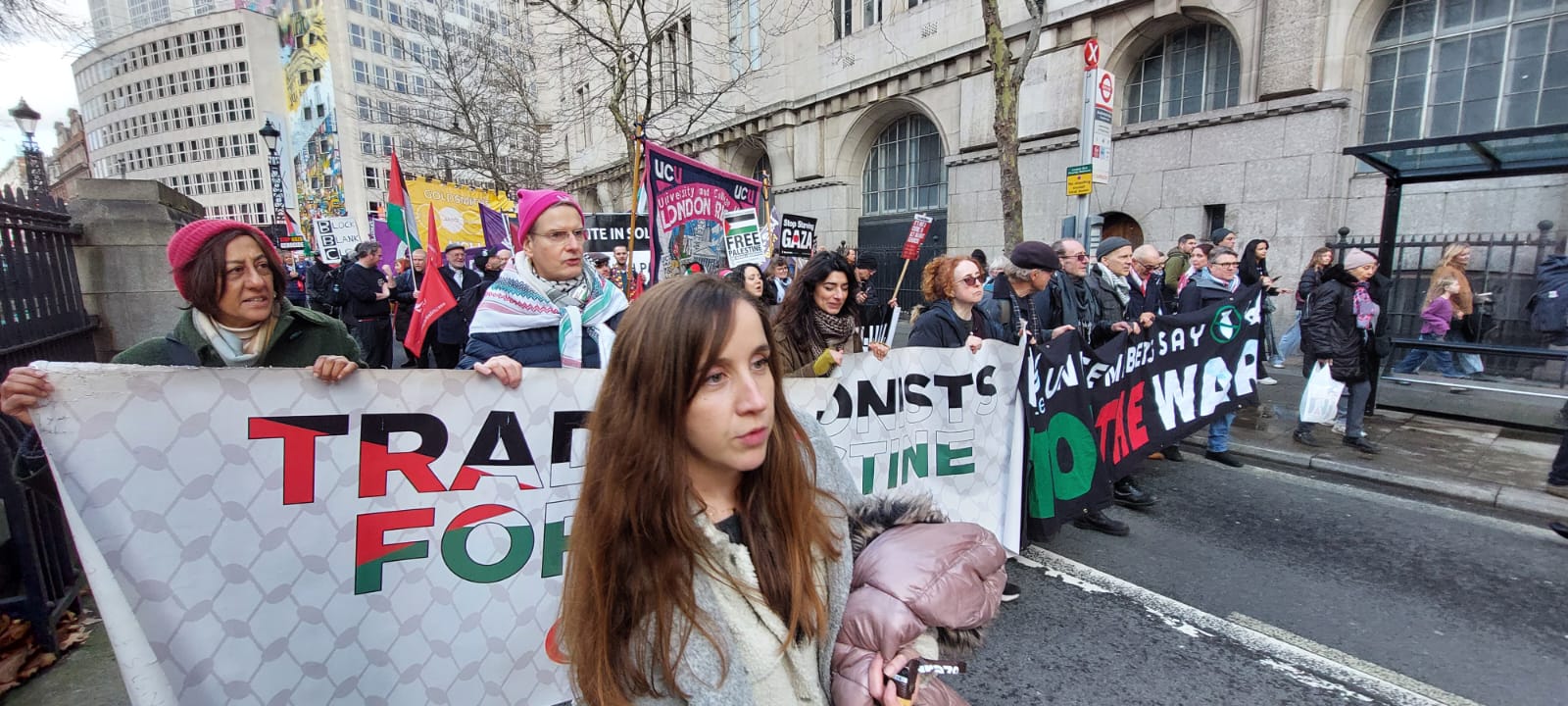
That is why the big demonstrations – like the Together demonstration on 28 March – really matter.
The far right are playing on workers’ lack of confidence, promoting division and trying to direct frustration against immigrants. The best way to combat this is to mobilise members to come together, first against the racists of the far right, but second, to stand up for ourselves as workers, to fight over our pensions, pay, jobs and conditions.
3. Challenging racism among staff
As the far right begin to gain a foothold in society, casual racism creeps back into everyday conversation. Members are raising concerns about colleagues who say they support Reform UK and claim there are ‘too many migrants in this country.’
We need to build the confidence of members to challenge this and answer the argument that there is ‘not enough to go around.’ We have to explain that this is a lie, that the capability of society to give people a decent living is greater than at any point in history.
But also we have to explain the purpose of this lie: it is, to quote Frederick Douglass, to ‘divide both to conquer each.’ Our enemy is not other working class people, black or white – it is that whole layer in society that flourished under Conservatives from Thatcher to Sunak and under Labour from Blair to Starmer: the super-rich and their enablers in government.
UCU should support initiatives for anti-racist education that challenge racist and anti-immigrant narratives in particular, but also misogyny and other forms of prejudice.
4. Let’s get organised!
Finally we need to take ourselves seriously as a trade union, and organise!
We need to hold regional union day schools where reps can share successes and plan new initiatives.
We should have a space on the national website to share resources for different sectors of post-16 education.
The rise of Farage and Reform is resistable, but to stop them we need to organise. That’s why the Together Alliance National Demonstration on March 28th in Central London has to be our focus in the short term.
Our approach is to fight for mass involvement, and uniting everyone against the far right. We need to explain to members what the far right’s agenda is and where they want to take Britain.
The experience of the US is teaching a new generation the scale of the threat, but also the potential for resistance.
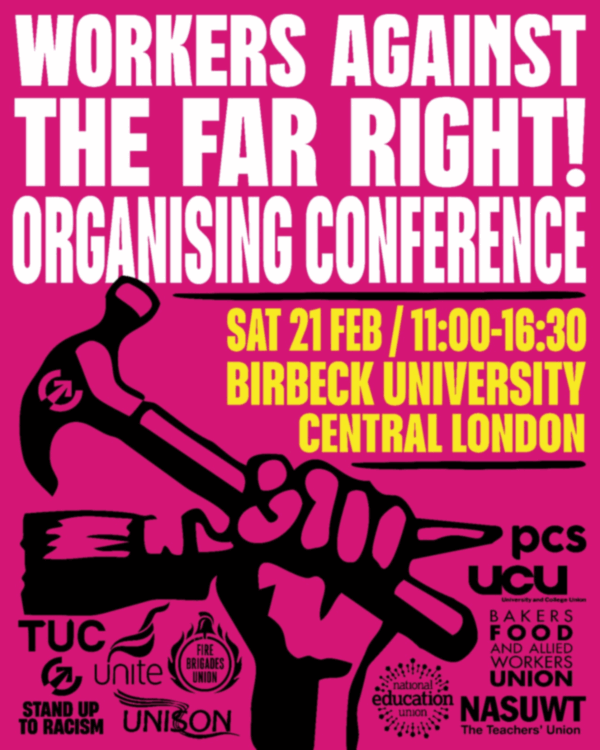
For trade union reps and activists, an important organising conference takes place on 21 February. The Workers Against the Far Right conference is organised by the TUC and Stand Up to Racism, and backed by many trade unions including UCU. This will be online and in-person.
It is time to fight for the future, for each other, and for ‘the strangers in our midst.’


.jpg)
Get involved


I’m standing for UCU Vice President (FE) because I care deeply about the whole post-16 education sector. I believe our union can and must be a powerful, organising force that delivers for members. Members want a union that listens, stands up for them, provides real solidarity and is prepared to fight with and for them.
If you have any questions, please get in touch as I really do want to hear from members: rpilling4UCUVP@proton.me
Unfortunately, turnout in UCU elections is often low, so every vote counts. If you support what I’m standing for, please vote for me and encourage others to do the same.
It would be an honour to serve as your UCU Vice President (FE) and to stand up for our members across the sector.
I am standing as a member of UCU Left, here is more information about our slate.
I am supporting Sean Wallis for UCU Vice President (HE) - please visit seanwallis.uk
If you’d like to get involved in the campaign, please fill in the form below: